
Global Trump Tariffs Revealed: What Does This Mean?
Synopsis
Discover the impact of President Trump's new tariffs announced on 'Liberation Day.' Learn about the tariff breakdown, its effects on importers, exemptions for bullion, and the resulting market turmoil. Stay informed on how these changes could affect your investments.

Key Takeaways
- Liberation Day announcement
- Trump's tariff breakdown
- Bullion exemption from tariffs
- Gold hits new all-time highs in major world currencies
- Market reaction to Trump's tarrifs
President Trump Reveals Global Tariffs
The much-anticipated reciprocal tariffs announcement by U.S. President Donald Trump was made on April 2, 2025, at 4pm Eastern Time (9pm UK Time). Trump stated that the day would be called 'Liberation Day' and the announcement took place in the White House garden. The audience included state senators, U.S. cabinet members, people who work in the American car industry, and the press.
Trump took center stage with his speech and then continued by showing a cardboard cutout on live television listing all countries that would face the reciprocal tariffs or the baseline tariff. This list was compiled with countries he feels are taking advantage of America through high tariffs or trade restrictions, resulting in higher rates for those countries.
Tariff Breakdown
President Trump's tariffs include a 10% baseline tariff on all imports into the United States from every country. In addition to this baseline tariff, higher reciprocal tariffs have been imposed on specific countries based on their trade practices. Specific tariffs have also been imposed on certain goods. For instance, there is a 25% tariff on car imports and parts from overseas.
For example, the UK will face a 10% baseline tariff from 5th April. Additionally, they will have to pay a 25% tariff on car imports and parts. The tariff on cars is expected to put 25,000 UK automotive jobs at risk.
| Percentage Range | Countries |
|---|---|
| 44-48% | Vietnam, Cambodia, Laos, Sri Lanka, and Myanmar |
| 34-37% | Bangladesh, China, Taiwan, Thailand, and Serbia |
| 26-29% | Pakistan, and India |
| 24-25% | Canada, Mexico, Venezuela, South Korea, Japan, and Malaysia |
| 20% | The European Union nations |
| 10% | United Kingdom, Australia, Ukraine, Philippines, Singapore, Brazil, Turkey, Colombia, Chile, and Argentina |
Figure 1 - Baseline and reciprocal tariffs faced by countries (%)
Summary
With the new tariffs in place and scheduled to go ahead, many have been left unhappy. China has been hit the hardest, as goods imported from China now face a 54% tariff rate, up from the previous 20%. The European Union (EU) and China have vowed to retaliate, with the EU describing the situation as a 'major blow' to the world economy.
How Do Trump Tariffs Work?
Trump Tariffs are not paid by the exporter; they are actually paid by the importer in America. The importer must pay the relevant percentage, depending on the country, to the U.S. government as revenue. It is then up to the company to decide whether to pass the cost of the tariff on to their customers or absorb it, affecting their own profits or changing their business strategy.
American-owned Cable News Network (CNN) reported that 'The US tariffs unveiled on Liberation Day' are expected to cost each 'American household $5,000 per year'. (See Source).
How Does This Affect Bullion?
According to the White House government fact sheet, bullion will not be subject to the reciprocal tariffs.
'Some goods will not be subject to the Reciprocal Tariff. These include: (1) articles subject to 50 USC 1702(b); (2) steel/aluminum articles and autos/auto parts already subject to Section 232 tariffs; (3) copper, pharmaceuticals, semiconductors, and lumber articles; (4) all articles that may become subject to future Section 232 tariffs; (5) bullion; and (6) energy and other certain minerals that are not available in the United States'. (See Source)
Gold Hits Record Highs After Trump Tariffs
Trump's tariffs announced during Liberation Day soared gold prices to record highs: $3,170 per ounce in United States Dollars and £2,430 per ounce in British Pounds. At the time of writing, the price of gold per ounce in both GBP and USD has eased.
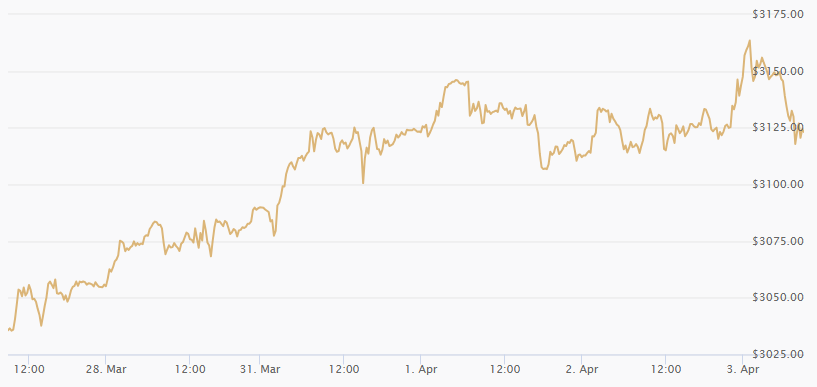
Figure 2 - Gold Price Per Ounce: All-Time High in USD
How Has Gold Performed In 2025?
In Q1-2025, gold surged to record highs, achieving almost a 20% increase. This is the safe haven's best performance since Q3-1986, when it increased by 24%. With geopolitical tensions running high and the threat of a major trade war looming, gold has emerged as a standout asset. Will you be adding gold to your portfolio in 2025?
Stock Markets Plummet
The result of Trump Tariffs have unsettled stock markets across Asia-Pacific and Europe. CNN is currently adding live coverage which you can follow on this topic. (See Source)
Key highlights Include
- Japan’s benchmark Nikkei 225 index closed 2.8% down.
- The European region’s benchmark Stoxx 600 index was trading 1.3% lower.
- France’s CAC was 2.1% down.
- London’s FTSE 100 had fallen 1.3%.
- Dow futures were 2.5% down and S&P 500 futures 3% lower.
- The tech-heavy Nasdaq was set to open 3.3% lower.
Summary
In conclusion, President Trump's new tariffs have sparked significant economic reactions globally. Gold prices have soared to record highs, while stock markets have experienced notable declines. As these changes unfold, it's crucial to stay informed and consider how they might affect your investments and the broader economy.
Sign Up to Our Mailing List
Stay informed by signing up for our mailing list and follow us on Instagram, YouTube, Facebook, TikTok and Twitter for the latest updates in the world of gold.
Related Articles


This guide and its content is copyright of Chard (1964) Ltd - © Chard (1964) Ltd 2026. All rights reserved. Any redistribution or reproduction of part or all of the contents in any form is prohibited.
We are not financial advisers and we would always recommend that you consult with one prior to making any investment decision.
You can read more about copyright or our advice disclaimer on these links.