
Record Gold Prices, Trump's Tariffs, and US-Europe Tensions
Synopsis
February 2025 has been a month of significant economic developments, impacting markets and investors worldwide. From record-breaking gold prices to geopolitical shifts, these events have shaped the financial landscape. This blog will delve into the key economic events of the month, providing insights for investors looking to navigate these turbulent times.

Key Takeaways
- Record gold prices in GBP, Euros, and USD.
- Trump's 25% tariffs on steel and aluminum.
- UK economic growth and rising inflation.
- Geopolitical Shifts & US-Europe tensions continue to increase.
- Ukraine's Minerals Deal with the US set to be signed on February 28th.
Gold Prices Reach All-Time Highs
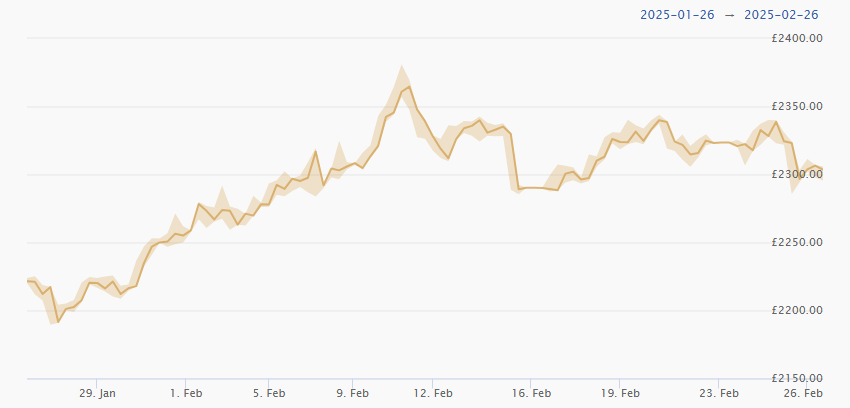
Gold has always been a safe haven for investors, and February 2025 saw it reaching unprecedented heights. In GBP (British Pound), gold hit an all-time high of £2,383 per ounce, while in Euros, it soared to €2,859. As of February 24th, gold prices in USD also reached a new peak at $2,959 per ounce. This surge is driven by economic uncertainty and increasing geopolitical tensions.
Is Donald Trump Starting The Next Trade War?
Since Donald Trump entered his second term as US President, his controversial decisions have sparked significant concern among the EU and other affected countries that a new trade war is just around the corner. Given the current economic climate, it's crucial for investors to stay informed about these developments and consider their potential impacts on global markets. What are your thoughts on this situation?
Trump's Tariffs on Steel and Aluminium Imports
On February 12th, Donald Trump announced a 25% tariff on all steel and aluminium imports, set to take effect on March 12th. This move has significant implications for global trade and the economy. For the UK, the potential impact is a £24 billion blow, as Trump vows to impose reciprocal tariffs on countries that charge VAT. Investors should be aware of the potential disruptions in the market and consider diversifying their portfolios to mitigate risks.
Misfiring Trump Trades and the Weakened Dollar
The so-called 'Trump trades' have started to misfire, with the US dollar weakening significantly. The US Treasury 10-year yield, which was at 4.8% in January, has now fallen to 4.53%. This weakening dollar impacts global markets and could affect the returns on investments denominated in USD. Investors should consider the currency risk and explore opportunities in other currencies or assets.
Donald Trump threatens to impose 25% tariffs on EU goods
During his first cabinet meeting of his second term, Trump made it clear that he is tempted to impose 25 per cent tariffs on imports from the EU. Examples of EU goods that would face tariffs include cars and other items. On the evening Trump made this comment, the European Commission threatened to retaliate, stating they would react firmly against unjustified barriers to free and fair trade.

UK Economic Growth and Inflation
The UK economy showed a modest growth of 0.1% after three months of stagnation. However, inflation has jumped sharply, driven by rising food prices, air fares, and school fees. This inflationary pressure could slow down potential interest rate cuts, affecting borrowing costs and consumer spending. Middle-aged investors should keep an eye on inflation trends and adjust their investment strategies accordingly.
Amid economic uncertainty, UK consumers are prioritising saving over spending. This shift is driven by concerns about the economic outlook and has led to increased demand for safe haven assets like gold. Investors should consider the implications of this trend on consumer-driven sectors and explore opportunities in more stable investments.
Rachel Reeves' Consideration to Cut Cash ISA Limit
Reports suggest that the UK government is considering lowering the annual contribution limit for cash ISAs from £20,000 to £4,000. This potential change could impact savings behavior and the banking sector. Investors should stay updated on this development and consider alternative savings and investment options.

View Source: (Official portrait for Rachel Reeves - MPs and Lords - UK Parliament)
US and UK Refuse to Sign AI Summit Declaration
In a surprising turn of events, the US and UK refused to sign the AI summit declaration. This decision highlights the growing concerns over AI regulation and its implications for the future. For investors, this could mean increased volatility in the tech sector as companies navigate the uncertain regulatory landscape.
The AI landscape is heating up with OpenAI and Baidu offering their chatbots for free in response to DeepSeek's advancements. This move aims to maintain their competitive edge in the rapidly evolving AI market. This signals a competitive environment in the tech sector, with opportunities for growth.
Three Years On: Geopolitical Shifts from the Ukraine Conflict
European Stock Market and Gas Prices
European stock markets rose on February 13th, buoyed by Donald Trump's talks with Russia about ending the three-year war in Ukraine. This development also led to a fall in gas prices. The geopolitical landscape remains complex, and investors should stay informed about these developments as they can have significant implications for energy prices and market stability.
UK Budget Surplus and Defence Spending
The UK's budget surplus for January fell short of expectations, with a surplus of £15.4 billion instead of the anticipated £20 billion. This shortfall could limit Chancellor Rachel Reeves' ability to implement her budget plans. Additionally, Prime Minister Keir Starmer announced the biggest rise in defence spending since the Cold War, increasing the defence bill to 2.5% of GDP by 2027. These fiscal developments could have long-term implications for the economy and investment landscape.
Ukraine's Minerals Deal with the US
Ukraine has agreed to a minerals deal with the US, aiming to improve relations with the Trump administration and secure long-term security commitments. This deal includes the joint development of Ukraine's mineral resources, including oil and gas. For investors, this agreement could open up new opportunities in the energy and resource sectors.
Related Articles


This guide and its content is copyright of Chard (1964) Ltd - © Chard (1964) Ltd 2026. All rights reserved. Any redistribution or reproduction of part or all of the contents in any form is prohibited.
We are not financial advisers and we would always recommend that you consult with one prior to making any investment decision.
You can read more about copyright or our advice disclaimer on these links.