
The History of the Sovereign
Synopsis
The Gold Sovereign is one of Britain's most iconic and enduring coins, with a history spanning more than 500 years.
First introduced by Henry VII in 1489 as a symbol of Tudor power and prestige, the Sovereign evolved through centuries of political, economic and industrial change before being reintroduced in its modern form in 1817.
This guide explores the complete history of the Sovereign, from its Tudor origins and Victorian expansion to its role in the British Empire, withdrawal from circulation, and revival by The Royal Mint.

Sovereign History at a Glance
Spanning more than five centuries, the Gold Sovereign has witnessed some of the most significant periods in British and world history. From its introduction by Henry VII in 1489 to its revival in the 19th century and continued production by The Royal Mint today, the Sovereign has evolved from a symbol of royal authority into one of the world's most recognised coins.
The timeline below highlights some of the key milestones that have shaped the Sovereign's remarkable journey:
- 1489: First Sovereign issued by King Henry VII
- 1604: Original Sovereign is discontinued under King James I
- 1817: Modern Sovereign introduced under King George III, including half and proof variants.
- 1825: Jean Baptiste Merlen's shield design debuts under King George IV
- 1855: The Sydney Mint opens as the first overseas branch of The Royal Mint
- 1914: Sovereigns leave circulation due to the outbreak of the First World War
- 1932: Last overseas branch mint Sovereign is issued
- 1957: Production resumes with Queen Elizabeth II's first Sovereign
- 2022: The first Sovereign featuring King Charles III
- 2025: The first silver Sovereign is minted
The First Sovereign (1489-1604)
The English Sovereign was first issued as a gold hammered coin in 1489 for King Henry VII. Designed by German engraver, Alexander of Bruchsal, the obverse featured the King in his coronation robes seated upon his throne, symbolising the power, success and splendour of the fledgling Tudor dynasty. The reverse design featured the Royal Arms of England set within a double Tudor rose.
The first gold Sovereign weighed 15.55 grams (half a troy ounce), was made from 23 carat gold and typically had face value of one pound sterling.
There were a number of changes to the weight of the Sovereign until it was last struck in 1604, when it was replaced by the gold hammered Unite and Laurel coins under King James I, in an effort to unify the English and Scottish crowns.

The Birth of the Modern Sovereign (1817)
In 1816, after the gruelling Napoleonic Wars and a crippling shortage of coins, the British government ordered a huge reform of British coinage, referred to as The Great Recoinage of 1816. It was decided that a new gold coin would be struck, the Sovereign.
Produced in both "full" and half sizes, the modern gold Sovereign was first struck in 1817 in The Royal Mint’s new premises in Tower Hill, using their newly acquired steam powered coin press, designed by Matthew Boulton and James Watt.
In accordance with British Coinage Act of 1816, the Sovereign would be made in 22 carat gold (0.916 fineness), weighing 7.98805 grams with 0.2354 troy ounces of fine gold, a diameter of 22.05mm, a milled edge and a nominal value of one pound or twenty shillings.
These specifications have remained the same since the coin's reintroduction, and are still used for the production of Sovereigns issued today.

St George and the Dragon
The Sovereign was widely acclaimed for both its attractive design, usefulness and its durability. Whilst the obverse bore the portrait of George III, it was the reverse design that stole the show.
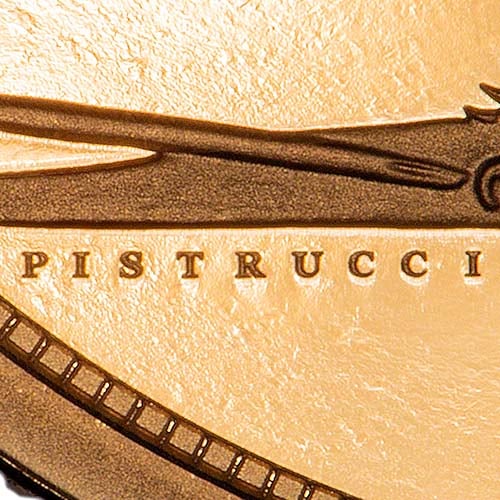
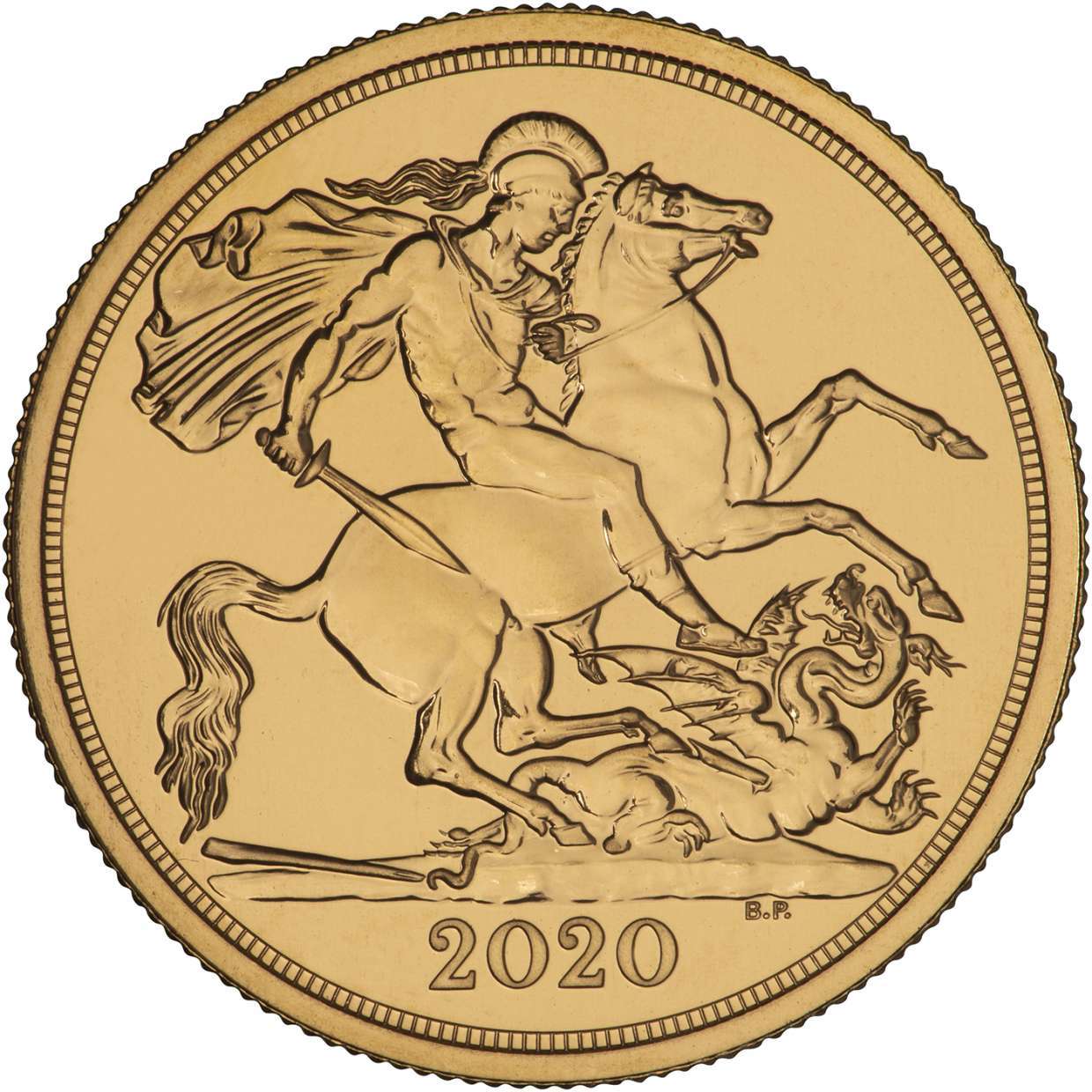
Set within a wide garter with the inscription HONI SOIT QUI MAL Y PENSE, Benedetto Pistrucci’s dramatic engraving of St George and the dragon has become synonymous with the gold Sovereign.
In 1821, the garter border was removed, St George's broken spear was replaced with a short sword and the entire reverse image was enlarged to fill the coin's face.
Pistrucci’s classic design of St George has truly stood the test of time, still featuring on Sovereign coinage in the modern day.

The Crowned Shield
In 1815, after Napoleon's defeat in the Battle of Waterloo, Jean Baptiste Merlen moved to London and began work under The Royal Mint, an appointment that some believe was down to Benedetto Pistrucci himself, after the two became acquainted in France.
During his time at The Royal Mint, Merlen became known for his intricate designs. He blended heraldy and art into stunning pieces, none less-so than the 1825 Sovereign which was produced for King George IV after a falling out between the King and Pistrucci.
A departure from Pistrucci's classic St George and the Dragon design, Merlen's Crowned Shield was lauded as more traditional and "British" motif; coins featuring the design remain highly sought after by collectors to this day.

The Victorian Expansion (1837-1901)
As the British Empire expanded during Queen Victoria’s reign, the Sovereign became the most widely circulated gold coin in the world, earning the title the "chief coin of the world".
Functioning as a global currency during this period, the strict weight, purity and reliability of the coin facilitated a massive expansion of global trade, as well as the economic influence of the British Empire.
Over 206 million Sovereigns were issued during Queen Victoria's reign.
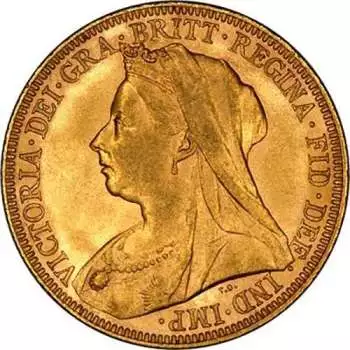
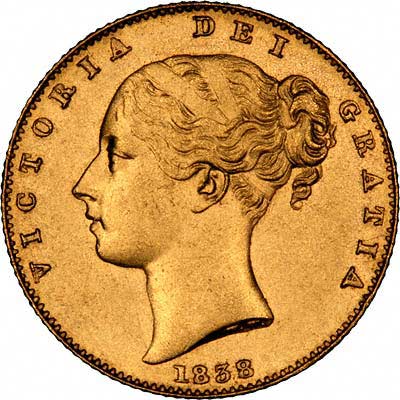
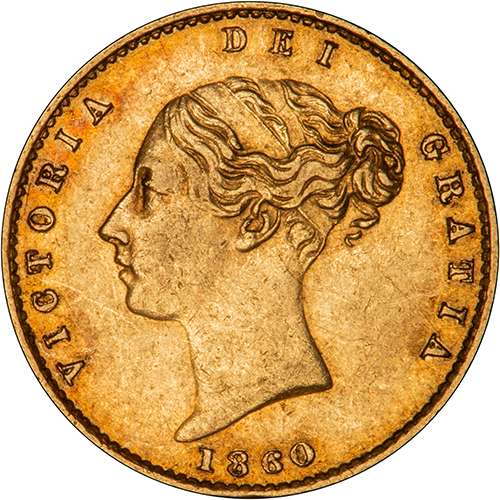
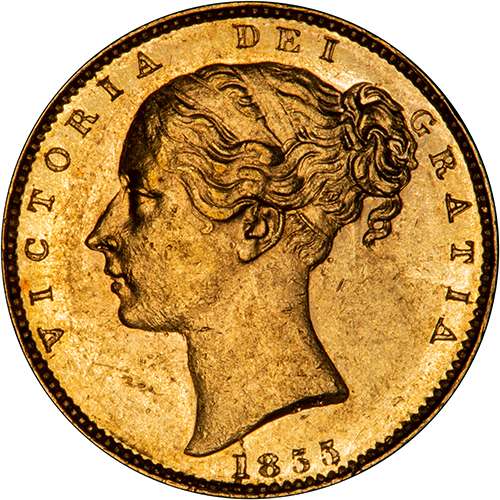
During her 63 year reign, Victoria Sovereigns were struck using three obverse portraits, the Young Head, Jubilee Head and Old Head alongside two reverses, the Shield and St George and Dragon.
There were many small variations on both the obverses and reverse designs, as well as errors and overdates, all of which can affect the value of the coin itself to collectors.

Overseas Production
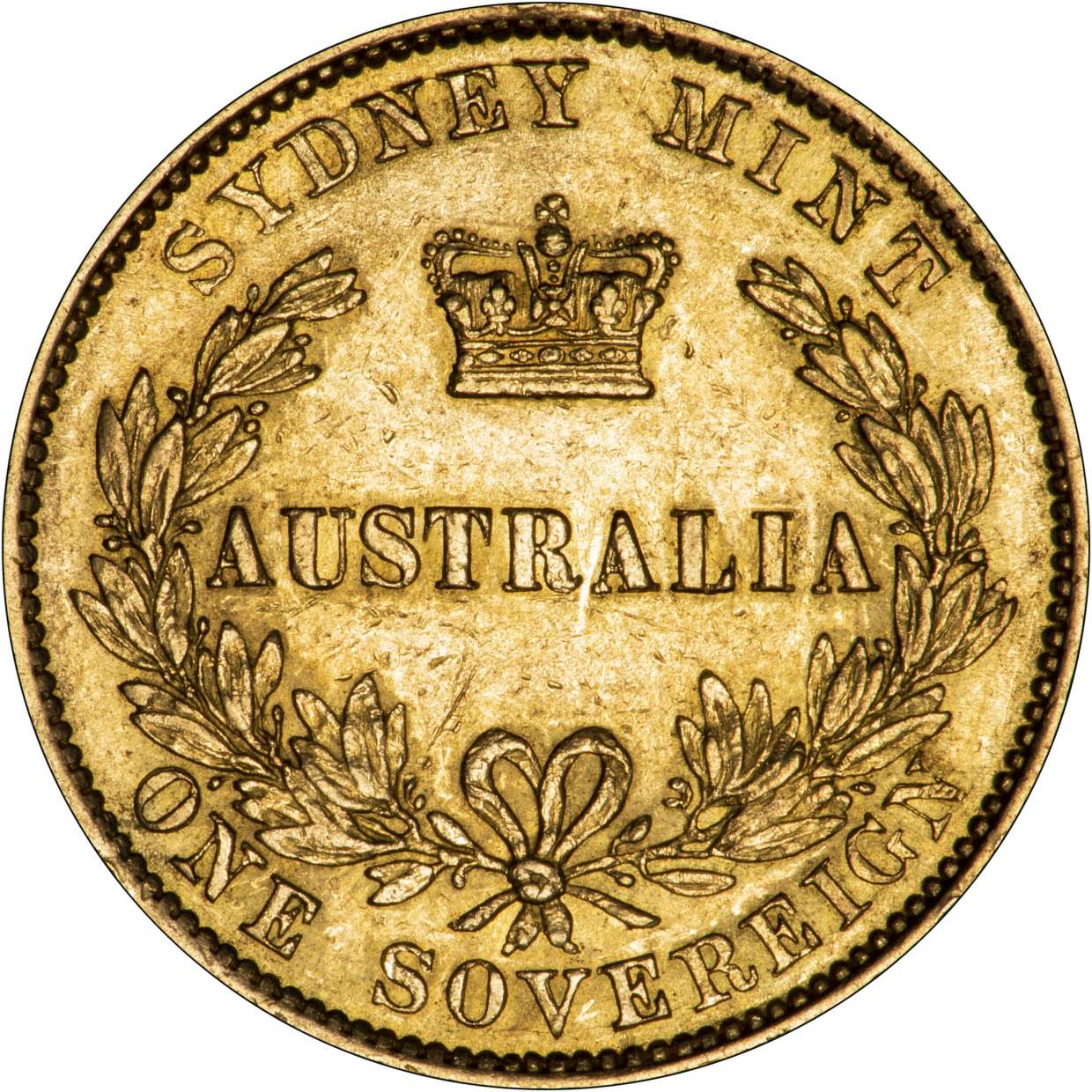
Beginning in the mid-19th Century, The Royal Mint opened a number of branch mints in various outposts of the old British Empire to produce Sovereigns closer to the main sources of gold mining. The first overseas branch mint was opened in Sydney, Australia in 1855.
Whilst the majority of Sovereigns continued to be struck in London, large quantities were produced in branch mints in Australia’s cities: Sydney (1855-1926), Melbourne (1872-1931) and Perth (1899-1931). The overseas branches then extended to Ottawa, Canada (1908 -1919), Bombay, India (1918) and Pretoria, South Africa (1923-1932).
Following a Royal Proclamation in 1871, overseas branch coins began to bear a mint mark defining where the Sovereign was produced. You can find mint marks on the obverse or the reverse of the coin, whereas the absence of a mint mark, when referring to genuine coins, indicates that the Sovereign was minted in London.

The Sovereign During Wartime (1914-1945)
The Sovereign remained a circulating £1 coin up until the outbreak of the First World War in 1914. During this period, most countries in the world reduced or stopped production of gold coins for circulation, instead switching to a "token" coinage and in Britain's case, banknotes, to allow for funds to be funnelled towards the war efforts.
One residual effect of the war was the creation of the barter kit. Containing multiple gold Sovereigns and provided by the UK government to the likes of RAF pilots and SAS operatives, these kits were intended for use when operating behind enemy lines as a way to pay for safe passage, bribe locals or escape capture.
By 1933, almost every country had stopped gold coin production entirely, with many not restarting until in and around the 1960s. Even now, there is no country on the planet where gold coins regularly circulate as part of their coinage system.

A Modern Revival (1957 to Present)
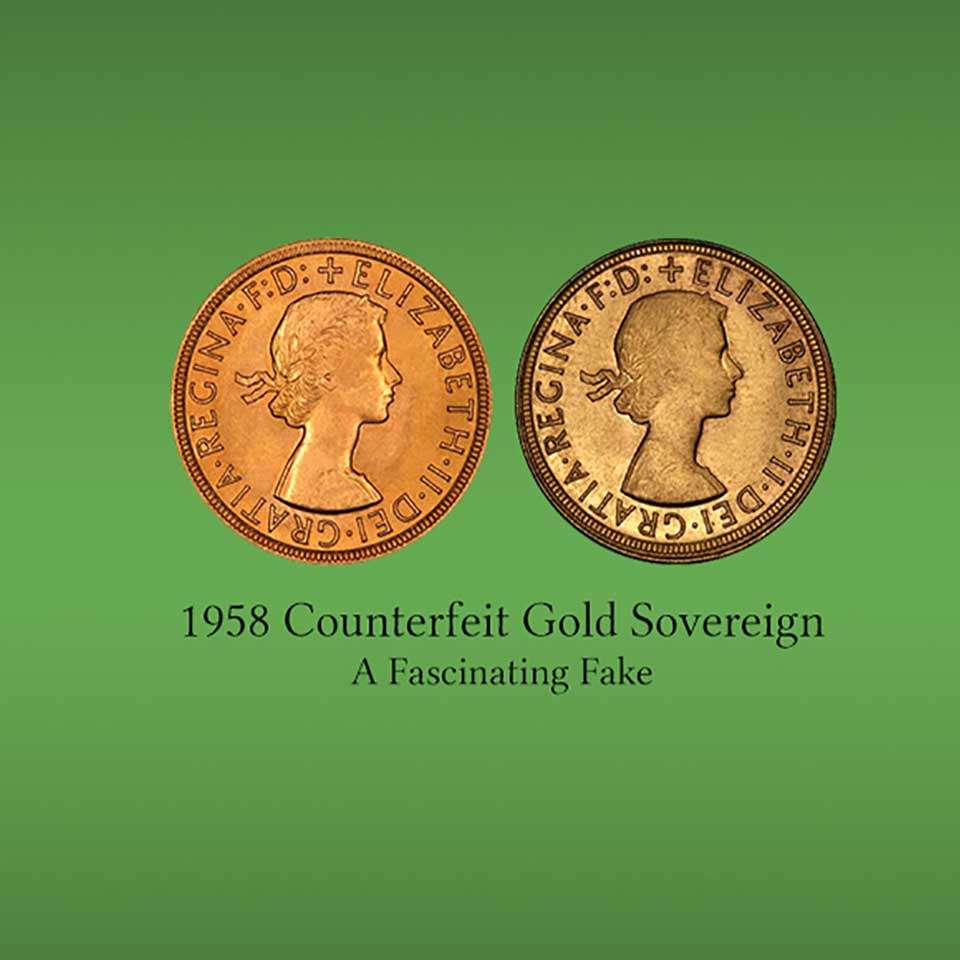
Post-war, there was a rising demand for gold bullion which led to a total of over 886,000 backdated 1925 George V Sovereigns being struck between 1949-1951. This demand also led to a rise in counterfeit Sovereign coins, particularly from the likes of Italy and the Middle East during post-war financial instability.

The need to subdue forgeries, as well as a desire to meet the growing demand, eventually led to the reintroduction of mass-produced Sovereigns under Queen Elizabeth II in 1957.
Covering her reign of over seven decades, the Queen Elizabeth II Sovereigns featured five definitive obverse portrait designs:
- Mary Gillick from 1957 to 1968
- Arnold Machin from 1979 to 1984
- Raphael Maklouf from 1985 to 1997
- Ian Rank-Broadley from 1998 to 2015
- Jody Clark 2015 to 2022.

A portrait by James Butler was commissioned to commemorate the Queen’s 90th Birthday which features on the 2016 proof Sovereigns.

Production of gold Sovereign bullion coins was suspended at The Royal Mint in 1982, with a focus turning to releasing collectable proof variants of the coin, and eventually, The Royal Mint's new flagship, the 1 oz gold Britannia.
In the year 2000 however, that all changed and the Sovereign returned to production once more. This time the historic coin featured a new rose-gold look due to the amount of copper used in the alloy, a feature that would stay with the Sovereign for over 25 years.
Ascension of King Charles III
Following Queen Elizabeth II's passing in 2022, King Charles III completed his ascension to the throne as King of the United Kingdom and as such his obverse portrait has featured on each Sovereign release since.
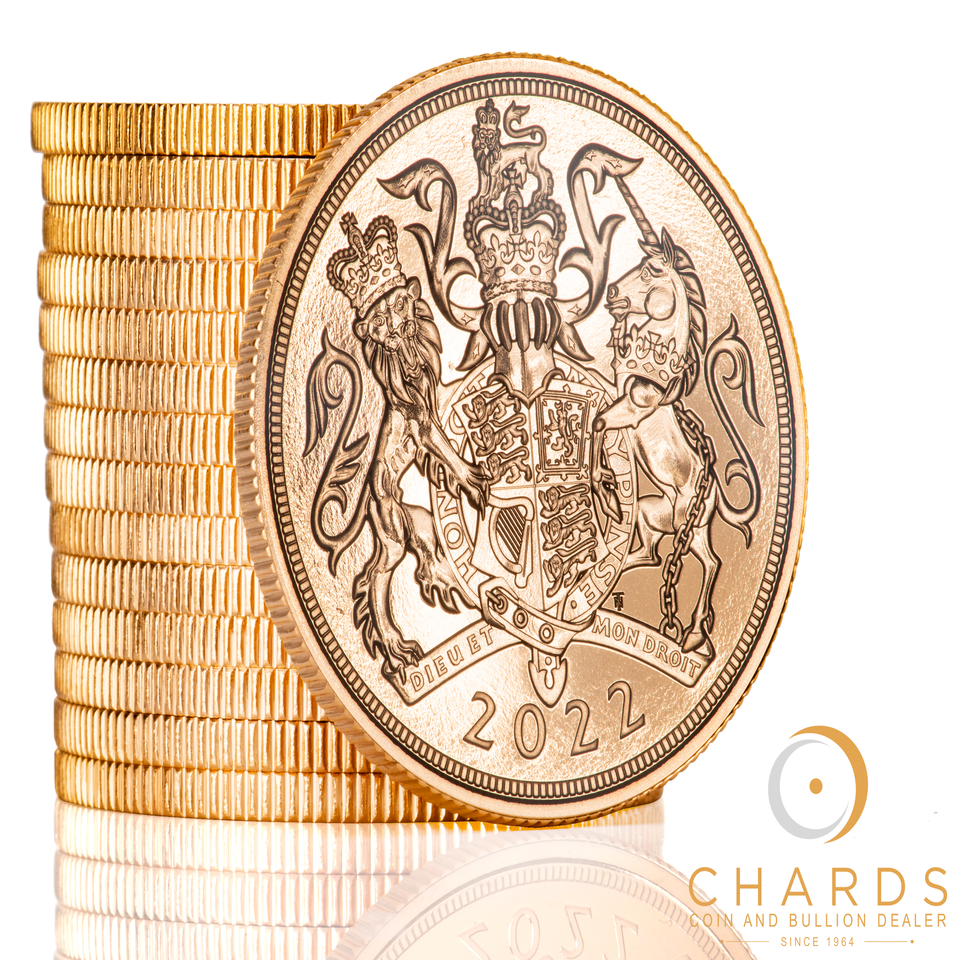
In 2022, King Charles III featured on the Sovereign coin for the first time, in a special memorial edition honouring the late Queen, which featured an intricate reinterpretation of the Royal Arms by Jody Clark. In the following year, the King's coronation Sovereign was released, featuring a crowned portrait to the obverse by Martin Jennings.

A Return to Tradition and the Introduction of Security Features
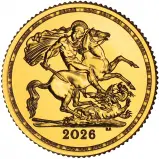
In 2026, the Sovereign took multiple strides forward. Not only did the coin range return to a stunning yellow gold finish, following feedback from the public and coin collectors the world over, it was the first Sovereign to showcase modern security features.

The security features, as shown above, consist of:
A micro-text Latin border to the reverse which reads:
HONI SOIT QUI MAL Y PENSE
Translating in English to:
Evil unto him that thinks evil of it
and on the obverse, a half-tone pattern around the circumference of the coin, alongside a latent image beneath King Charles III's portrait, showcasing the Tudor Crown and Tudor Rose.
Technical Specification of the Modern Sovereign
| Diameter | 22.05mm |
| Weight | 7.98805g |
| Alloy | 22 carat gold |
| Fineness | 0.9167 |
| Actual Gold Weight | 0.2354 Troy oz |
The Silver Sovereign
In 2025, The Royal Mint released the official British Sovereign in silver for the first time in its history.
Initially a controversial release, with numismatists and enthusiasts opening a debate over tradition and legal ramifications, the silver proof Sovereign has steadily become a favourite for newer collectors, expanding interest in Sovereign collecting with a more accessible price point than its golden counterpart.

What Size is the Sovereign?
Throughout its modern history, the gold Sovereign has been released in a variety of sizes to meet the demand of both investors and collectors.
- 1817: The "full" Sovereign (22.05 mm / 7.98g) and half Sovereign (19.30mm / 3.99g)
- 1820: Double Sovereign (28.40mm / 15.98g) and quintuple Sovereign (38.61mm / 39.94g)
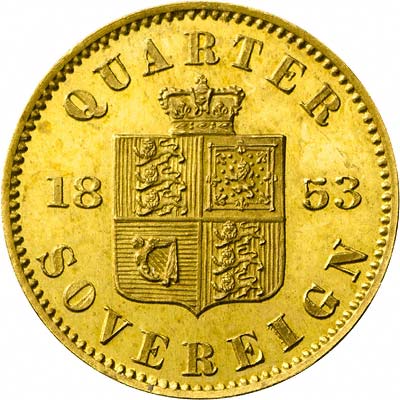
- 2009: Quarter Sovereign (13.50mm / 2.00g)
Both the double Sovereign and quintuple Sovereign began production as proof releases before being issued for circulation in 1823 and 1887 respectively.
Different Finishes of the Sovereign
Sovereign coinage is also available in a range of finishes. For more information regarding coin finishes, we recommend our dedicated blog, What is Proof? An Overview of Coin Finishes.
Bullion
Sovereigns of a bullion finish can typically be considered the "standard" Sovereign. Initially produced for circulation as sterling legal tender up until the First World War, bullion Sovereigns have been available in uncirculated condition since their reintroduction in 1957 and are typically created en masse with a single strike of the die.

Proof
Proof Sovereigns are struck to the highest quality of finish, with a strictly monitored production process in which the coin's blank is fed by hand and struck multiple times using highly polished dies to create incredibly defined and detailed designs.

Brilliant Uncirculated
A more modern finish first introduced with the 1983 Royal Arms £1 coin, Brilliant Uncirculated coins fall somewhere in the between of bullion and proof, showcasing "proof-like" detail but with fewer die strikes of their proof counterparts, these coins often feature a more matt finish rather than a mirror polish. This finish is typically reserved for the larger quintuple Sovereign coin.

Rare Variants of the Sovereign
As with hobby or interest, certain Sovereigns have become more collectable over time. Whether for low mintages, errors or oddities, listed below are some highly sought after Sovereign pieces:
- 1937 Edward VIII Proof Sovereign
- 1953 Elizabeth II Proof Sovereign
- 1850 Victoria Sovereign, overdate 8 over 5
- 1838 Victoria Proof Sovereign
- 1819 George III Sovereign
- 1911 George V Proof Sovereign, matt finish
- 1909 Edward VII Sovereign, Ottawa mint, satin finish specimen
- 1830 George III Sovereign, Medal Alignment
- 1884 Victoria Sovereign, Melbourne mint
- 1887 Victoria Proof Sovereign, Sydney mint
Ansell Sovereigns
In 1859, The Royal Mint rejected a batch of gold alloy as it was too brittle for coin production. However, metallurgist, George Ansell managed to make the gold alloy tougher than normal Sovereigns and the gold was used to produce the Ansell Sovereign.
You can spot an Ansell Sovereign by the extra line in the hairband at the back of the Queen’s head.

Overdates and Errors
Whilst Sovereigns in high grades and low mintages are highly desirable to serious coin collectors, there is a growing demand for Sovereigns with overdates and errors. An overdate occurs where a die was recut or repunched to alter the date.
Errors sometimes happened when letters or numerals were accidently mixed up e.g 1 might be substituted with a capital I, or A would be an upside down V.

Not Every Year Has a Sovereign
It should be noted that not every date exists for gold Sovereigns. In fact, gold Sovereigns were not issued for circulation after 1932, although The Royal Mint resumed production in 1957 partly to meet world demand for gold bullion coins.
The only dates minted between 1932 and decimalisation, were 1957 to 1959, and then 1962 to 1968. These dates all bear the first portrait of Queen Elizabeth II, as used on almost all pre-decimal coins, with Pistrucci's familiar St George and the Dragon design on the reverse.
Of these dates, 1957 and 1959 are the two most difficult to find, resulting in them typically being the most collectable.

Did You Know? Sovereign FAQ
When was the first Sovereign minted?
The first coin to bear the Sovereign name was minted in 1489 under Tudor rule however, Sovereign bullion coins began production in 1817.
Why was the Sovereign created?
The original gold Sovereign was created by King Henry VII to assert power and legitimacy to his Tudor dynasty. It returned in 1817 during The Great Recoinage to stabilise British currency following the Napoleonic Wars.
Who created the Sovereign's St George and the Dragon design?
The St George and the Dragon design was created by Italian artist and sculptor, Benedetto Pistrucci in 1817.
Why did Sovereigns leave circulation?
Sovereigns left circulation following the outbreak of the First World War, due to a need to hold and protect the British Empire's wealth and fund the war efforts. Following the introduction of tokenised banknotes and eventually decimalised money, precious metal coinage fell out of favour, with governments around the world instead opting for more affordable alternatives.
Which countries minted Sovereigns?
Official British Sovereigns have been minted in the UK, Australia, South Africa, Canada and India.
When did Sovereign production restart?
There have been multiple restarts of Sovereign production. Notably in 1817 following The Great Recoinage, in 1957 as an effort to meet growing global demand and counter forgeries, and in the year 2000, again to meet global demand for trustworthy physical gold investments.
How many monarchs have appeared on Sovereigns?
Between the original Sovereign coin and the modern Sovereign, there have been a total of 16 monarchs to feature on Sovereign coinage.
Interested in Sovereigns of Your Own?
We have a huge range of Sovereigns for sale, from bullion to collectable Sovereigns in varying years, designs and finishes.
We are always interested in buying Sovereigns of any variety, and particularly rare years or mints. Whether you have one coin or a whole collection, contact us and we would be happy to make you an offer.
Related Blog Articles





Popular Products








This guide and its content is copyright of Chard (1964) Ltd - © Chard (1964) Ltd 2026. All rights reserved. Any redistribution or reproduction of part or all of the contents in any form is prohibited.
We are not financial advisers and we would always recommend that you consult with one prior to making any investment decision.
You can read more about copyright or our advice disclaimer on these links.