
What Exactly Is a Bullion Sovereign?
Synopsis
Britain's original flagship gold coin, the modern bullion Sovereign has been produced by The Royal Mint since 1817 and sought after by investors for over 200 years.
In this blog we explain what exactly is a bullion Sovereign coin? As well as a brief overview of the differences between bullion and proof Sovereigns.

What Is a Bullion Sovereign Coin?
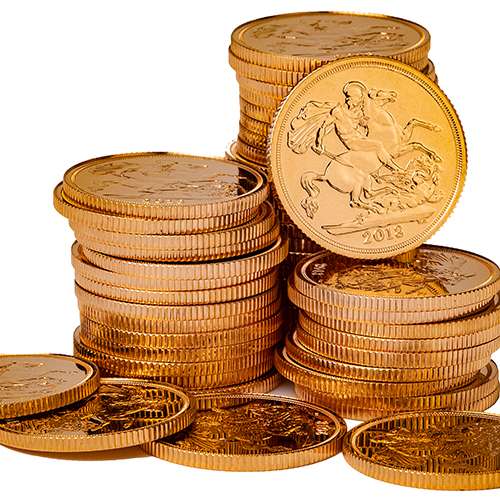
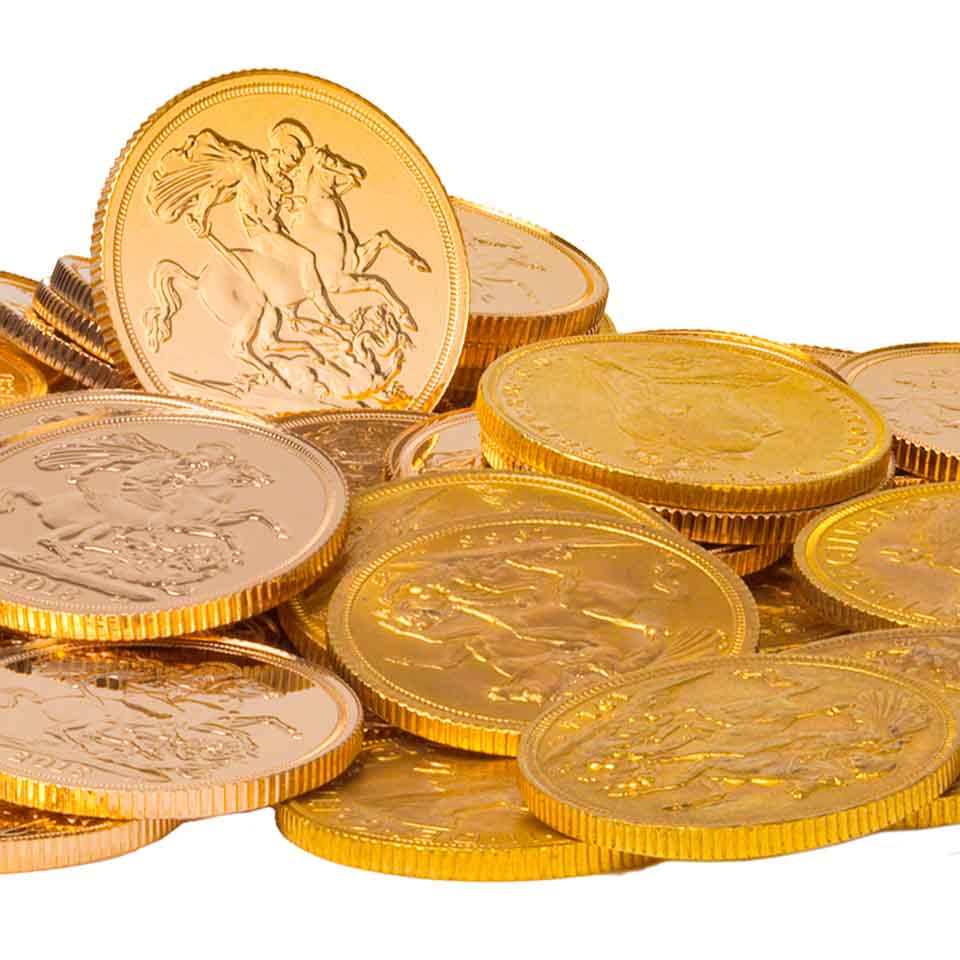
A bullion Sovereign coin is a gold coin struck by the UK's Royal Mint, popular with investors due to its exemption from VAT and Capital Gains Tax, as well as the collectability of historical issues.
The modern Sovereign, first introduced in 1817 and produced to this day, is struck in 22 carat gold, contains 0.2354 troy ounces of gold, and weighs 7.98805 grams. Visit our technical specification blog for a full breakdown of the full Sovereign specifications.
What Is Bullion?
It might be best to start with a definition of the word bullion. According to the Cambridge Dictionary:
Rare metal such as gold or silver, often in the form of thick blocks, that is bought and sold in large quantities as a commodity or investment:
The price of gold bullion rose by 4.8%.
Although the Sovereign does not appear in the form of a thick block, the bullion definition applies nonetheless. When we speak of bullion Sovereigns, we are referring to mass-produced Sovereign coins, minted from a single strike and bought and sold based on the value of their metallic content.

Why Are Some Sovereigns Called Bullion Sovereigns?
Gold Sovereigns were originally circulating coins that underpinned the British Gold Standard. During World War I, they were withdrawn from circulation to help preserve gold reserves before Britain abandoned the Gold Standard in 1931, and the last overseas Sovereign was minted in 1932. No Sovereigns were then issued until 1957 (except for proof coins issued for the Coronation in 1937) when the Mint resumed production to meet world demand for Sovereigns as bullion coins, and to help control the rise of forgeries. These Sovereigns were simply referred to as Sovereigns or gold Sovereigns, and were issued in most years until 1982 when production stopped.
In 1979, The Royal Mint started to issue proof Sovereigns for sale to collectors, continuing to this day, with the proof Sovereign a favourite for collectors. In the year 2000, The Royal Mint restarted production of non-proof uncirculating Sovereigns. To differentiate these from the proof version, The Royal Mint called the new uncirculating coins, bullion Sovereigns.
What Are the Differences Between Bullion and Proof Sovereigns?
Bullion Sovereigns are bought as an investment, as they are primarily sought for their metal content. Although bullion Sovereigns may feature the same design as a proof coin, bullion Sovereigns are struck once and mass-produced to match the high demand of global investors.
Proof coins are specially produced to a much higher standard of finish than bullion Sovereigns, often struck three times to allow for greater precision and finish. Originally, proof coins were intended as pre-production samples to seek approval by the Master of the Mint and the ruling monarch before being opened up for purchase as collectables following the introduction of the modern Sovereign. Proof Sovereigns are produced in lower quantities than their bullion counterparts and are traded based on their collectability and detail, rather than metal investment value. Learn more about the different Sovereign coin finishes in our complete Sovereign Guide.
It's in the Details

Above shows the difference between the 2026 proof and bullion Sovereign coins. The contrast between matt and polished surfaces shows up very well on the proof coin, allowing fine details to be seen more easily. On the bullion coin, the whole Sovereign showcases a similar finish, resulting in it being more difficult to distinguish the details of the design from the background.
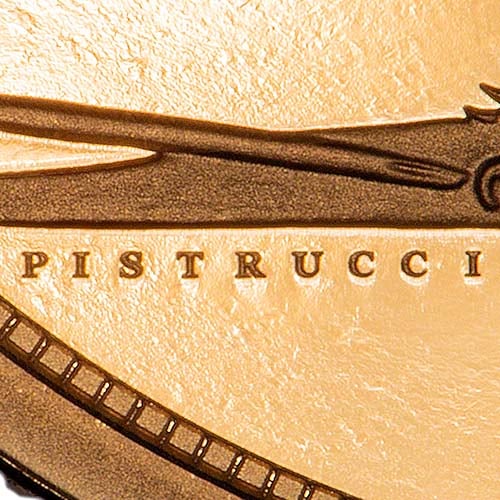
Also noticeable is the micro-text security feature which is present on the bullion variant but missing from the proof coin, showcasing the different roles of these coins.
Why Are Bullion Sovereigns So Popular With Investors?
Since 1957, when The Royal Mint began production of a dedicated investment bullion Sovereign to counteract an increase in forgeries of the popular coin, the Bullion Sovereign has become a mainstay in precious metal investments in the UK and around the world.
The Sovereign's exemption from VAT and Capital Gains Tax makes the coin an ideal avenue to maximise precious metal investments; whilst their ease of liquidity and strong secondary market demand make the Sovereign widely traded and easy to sell.
Containing less than a quarter of a troy ounce of gold, and struck in 0.917 fineness, the bullion Sovereign has typically been seen as a relatively affordable purchase for new and experienced investors in the precious metal investing. Although, with the rising gold prices, smaller variants such as the half Sovereign have grown in popularity.
Sovereigns in Jewellery
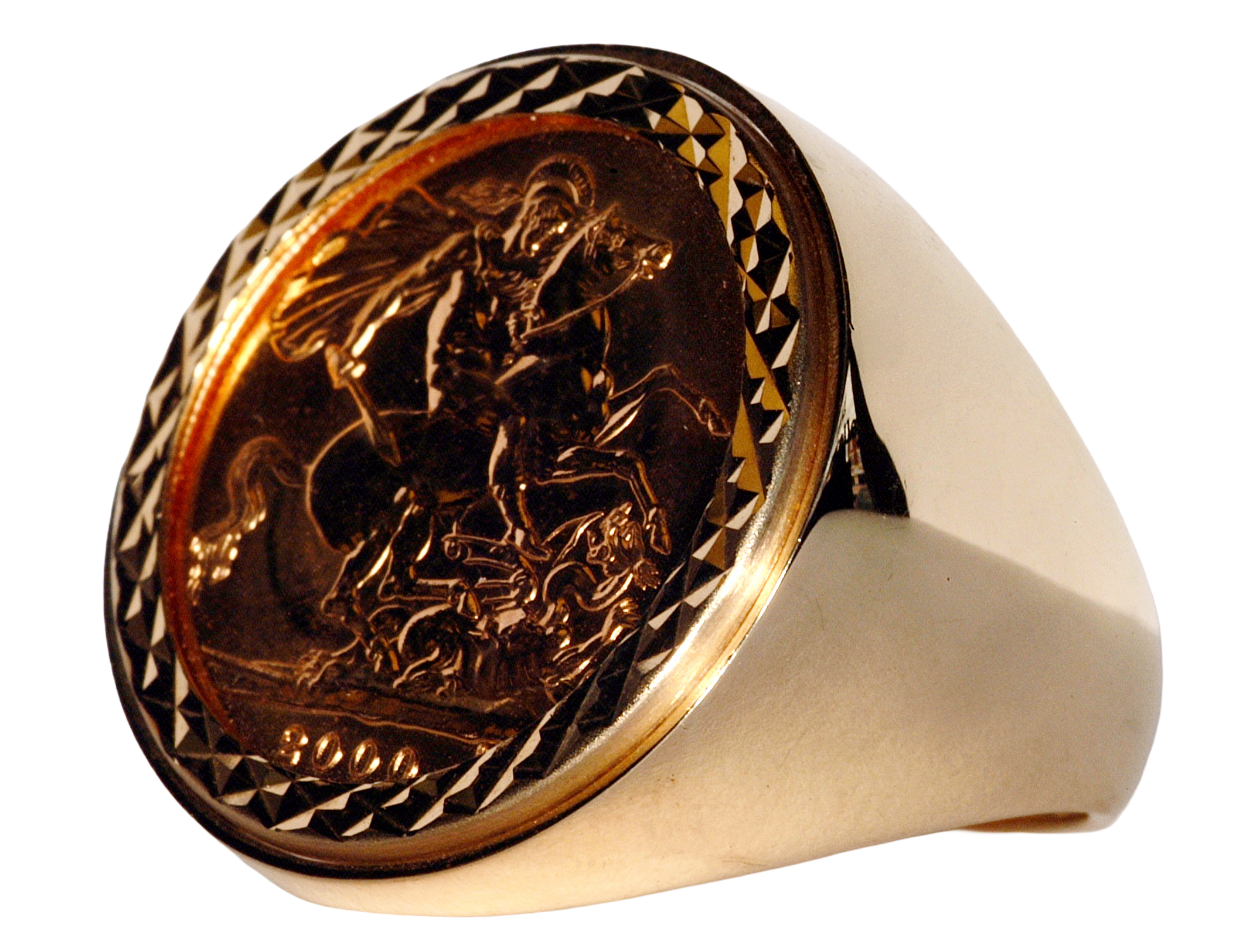
Sovereigns have been enjoyed in jewellery since the coin's introduction, with pendants, pocket watch chains and rings being particularly popular options to house the owner's coin.
Even bullion Sovereigns will become worn, marked and polished by wearing as jewellery, but this cannot be helped. Some people worry that this will detract from their value and whilst this is true, the same argument could be applied to almost anything in life.
The important thing is to obtain value by getting the pleasure of ownership.
Is It Better to Buy Bullion or Proof Sovereign Coins?
The answer is dependent on the reason you are buying. If you are looking to buy a Sovereign for long term investment then we recommend a bullion Sovereign.
However, if you are interested in a higher quality finish and are excited by the collectable aspect of the coin then a proof Sovereign is ideal. Some collectors only collect proof coins, others only non-proof coins.
We are often asked for advice when people wish to buy a Sovereign as a gift. This entirely depends what you think the recipient will wish to do with the coin, as well as the meaning behind the gift. For use in jewellery, it is better to use bullion, non-proof coins, as the finish of proof coins would quickly be spoilt. If the recipient is likely to keep and display the coin in its original box, then a proof one may be better.
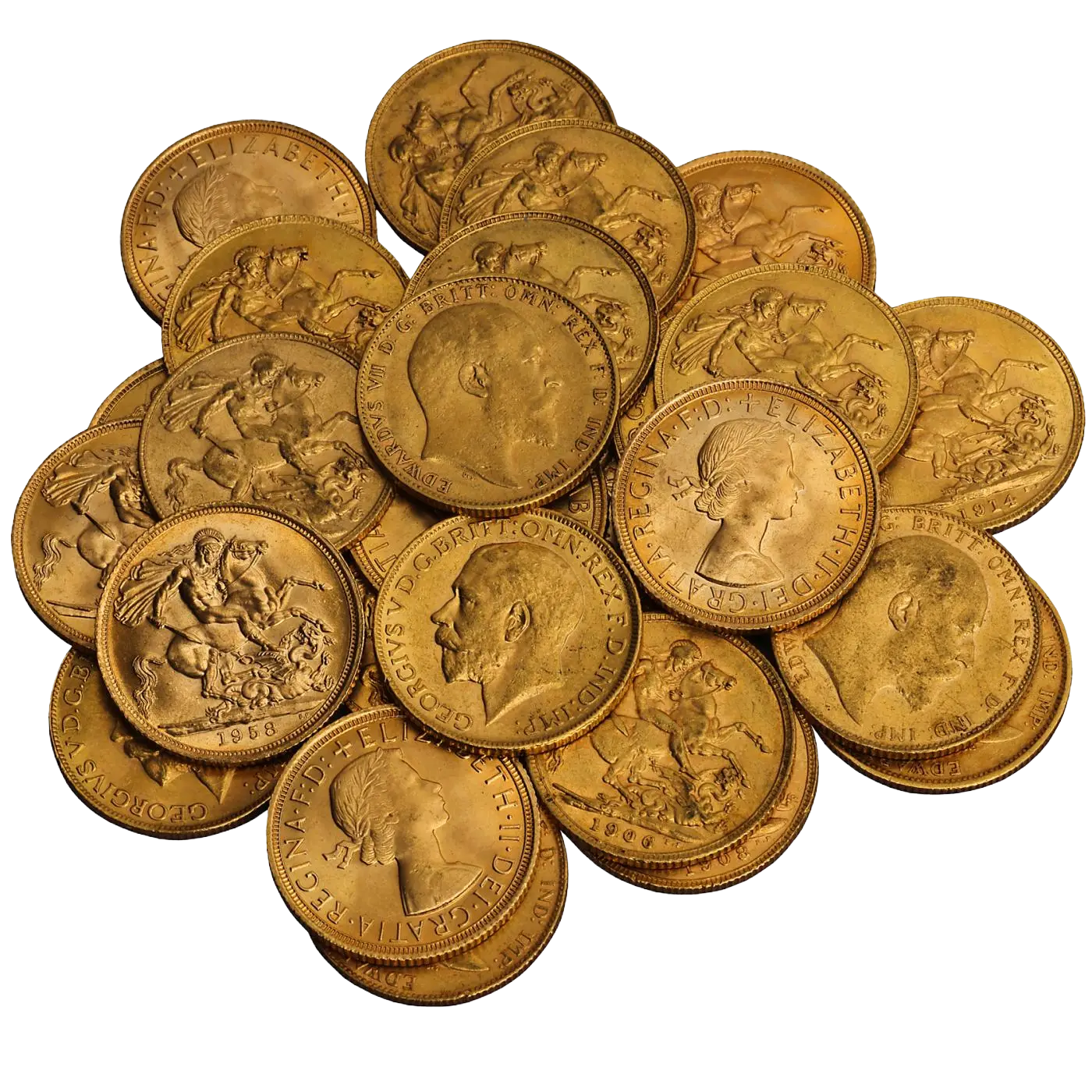
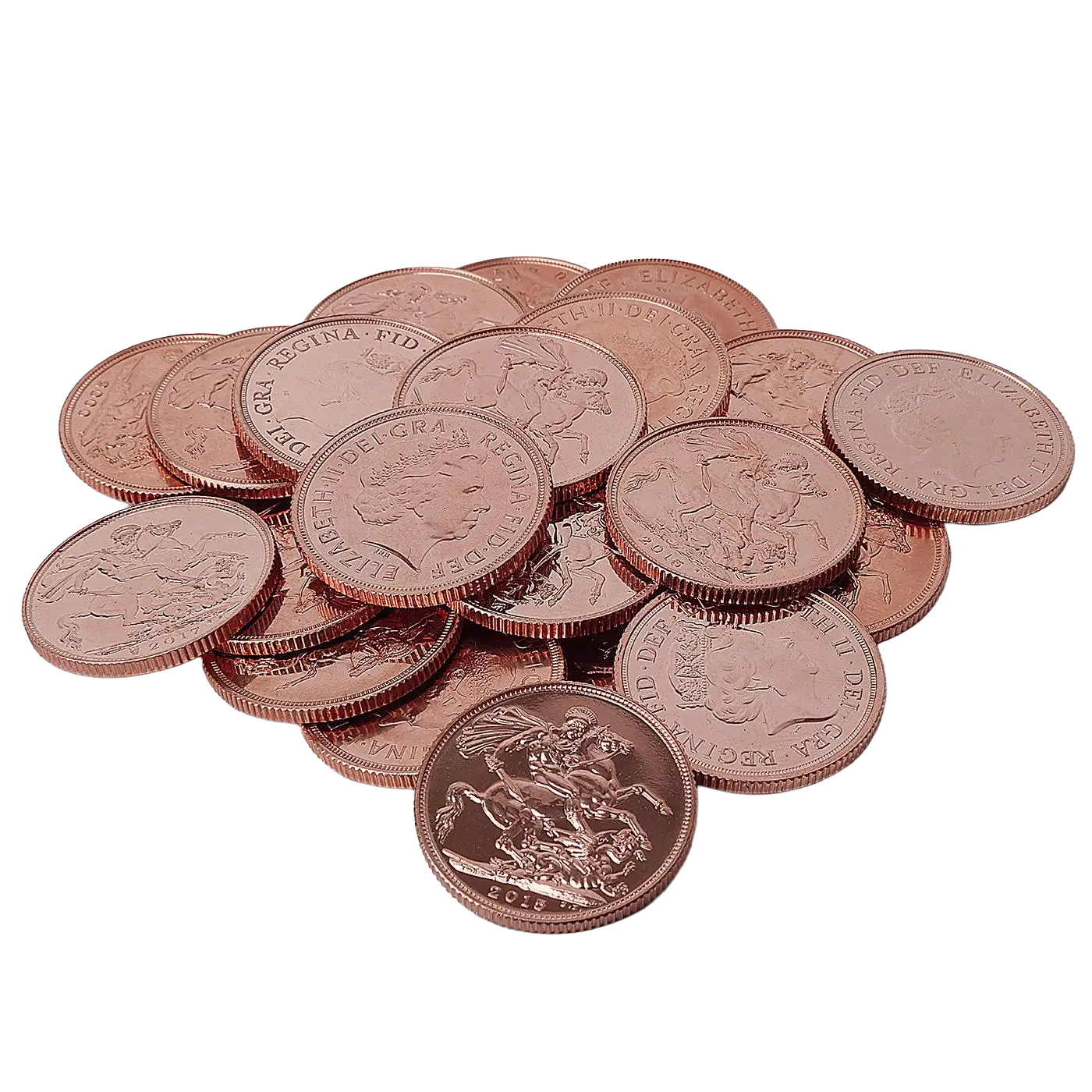
If you are looking for an outright bullion investment, check out these prices of our minty and secondary market Sovereigns below:
Gold Sovereign Coin Best Value - Pre-Owned
Stock Status - Orderable
|
Gold Sovereign Bullion Coin - Minty
Stock Status - In Stock
|
We recommend browsing our full Sovereign category page to purchase both investment bullion and collectable coins at low premiums over their intrinsic metal value.
Interested in Learning More?
To stay informed of the Sovereign price, we recommend viewing the live gold price as well as keeping up to date with the gold:silver ratio.
If you'd like to learn more about the British Sovereign, why not read through our full Sovereign Guide?
Related Blog Articles







This guide and its content is copyright of Chard (1964) Ltd - © Chard (1964) Ltd 2026. All rights reserved. Any redistribution or reproduction of part or all of the contents in any form is prohibited.
We are not financial advisers and we would always recommend that you consult with one prior to making any investment decision.
You can read more about copyright or our advice disclaimer on these links.