
Coin Conditions - What is Minty, Pre-Owned, Grade C?
Synopsis
Our coin offerings are typically categorised into the following conditions: new, minty and pre-owned.
For customers looking for our cheapest offerings there are also "grade c" coins. These products will have wear or blemishes, allowing you to add to your collection for less.
Before making a purchase, we recommend reading through this page to understand the differences between conditions and make the purchase that's right for you.

Bullion Conditions
Below is a brief overview of the typical categories that our bullion coins fall into.
If you do have further questions, please feel free to contact us and our UK-based customer service team will be happy to assist.
New
These products typically warrant the highest premiums for bullion, but they will be in mint condition and feature the latest designs and security features.
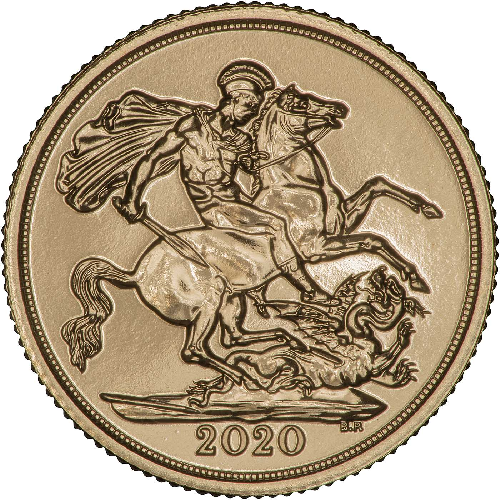
Shop our full range of latest year bullion.
.jpg)
.webp)
Minty
Minty coins are pre-owned products that stock remains in mint or near-mint condition, potentially including recent year coinage or items in their original packaging.
We wish to remind customers that this bullion option is cheaper than the respective latest year of coin and therefore may take longer to source if stock is not readily available. On a daily basis we look to buy from our suppliers which are a mix of mints, bullion dealers, companies and private investors to source these products as soon as possible.
Minty coins are offered as "Our Choice", which means that we are unable to select specific dates, designs or variants for the product, and that the product received may vary across these variables. If you are wanting a specific design or date, we recommend purchasing it outright.
The listings below are just a select few of our Minty products:
Pre-Owned / Secondary Market
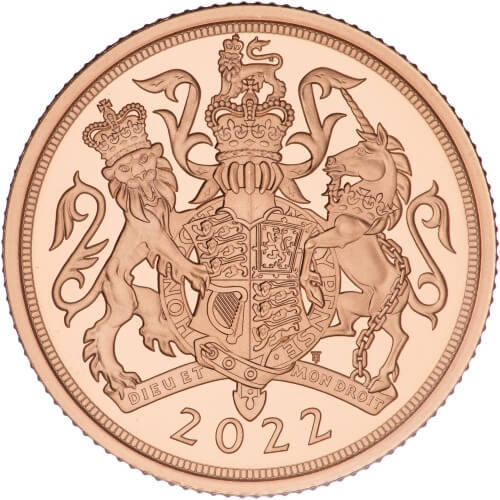
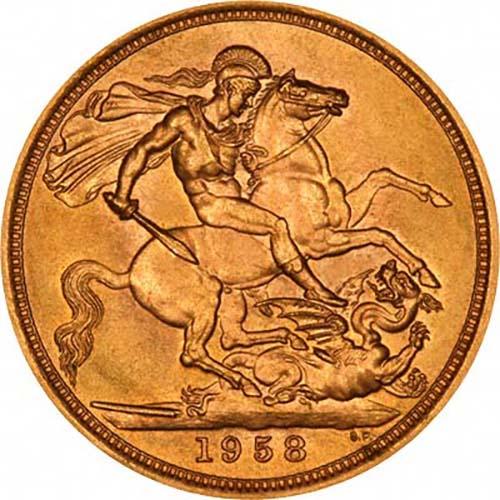
These are our lowest price/premium bullion coins. Most items here will typically have been in circulation, but may include more recent releases which are in less than 'mint' condition. Our Pre-Owned and Secondary Market products will showcase signs of handling and wear, such as scratches, slight knocks or naturally occurring red spots, all of which is typical of regularly circulating bullion coinage.
We look to buy these items on a daily basis from our suppliers which are a mix of mints, bullion dealers, companies and private investors. More information on this can be found on our Secondary Market Gold article.
Popular secondary market categories can be found below:
.jpg)
Why Offer Different Conditions?
The easiest option operationally would be to simply offer two conditions of coin, new variants and pre-owned variants. The reason we avoid this is because bullion coins vary in appearance and condition, especially as time goes on and natural processes or wear occurs.
Treating some of the newer or better-condition coins as our lowest priced option could degrade their appearance, and we know having a nice coin can be important, especially with the growing community of bullion collectors.
We also greatly value customer expectation with those buying newer coins expect the condition of the coins to be better than, for example, a circulation-era gold Sovereign.
We use the range of condition categories to sort our coins according to quality and appearance, so that you are able to choose the product that best suits your needs and taste.
Brand New Vs Pre-Owned
Depending on who we source the product from, coins can be brand new or pre-owned, and whether a bullion coin is brand new or pre-owned does not always correlate with coin condition and appearance.
If the source is a mint supplying coins straight from the production line, they can be regarded as brand new. If a supplier, a company or a member of the public were to buy these and then sell them to us then they become pre-owned.
Most customers have the view that a pre-owned coin is one previously owned and handled by a member of the public, but companies and suppliers can be customers holding stock as an investment over time, with many storing into vaults directly from purchase.
For Example:
If we buy a 2015 coin from a supplier that has never been in the hands of the public, would you regard this coin as new or pre-owned? Likewise, if a retail investor buys a tube of gold coins, never opens them and then finds in 10 years they are in perfect, mint-like condition, would you consider these as a lesser condition from a new coin?
We see regularly see cases like the above with our vaulted storage offering, where customers who opt for storage here at Chards when buying brand-new stock then sell them back to us straight from storage. The customer never takes receipt of their items and when the coins are sold back to us, they move in the sealed tubes from one shelf to another, remaining sealed and in mint condition, albeit now listed under pre-owned stock.
What is Mint Condition?
Mint condition as used within the world of precious metals simply refers to the state that a coin is received in directly from the mint or refiner. It does not necessarily align with the common use-case as an idiom for something being "perfect" condition.
Due to the nature of mass production, coins directly from mints can often show production marks such as edge knocks, rim-wear or faint scratches from the minting process itself. This will typically not affect the value of the coin when it comes to time to sell your precious metals, unless the damage is deemed too severe, in which case we would still be able to make an offer for the coin as grade C.
If you are wanting something closer to perfection, we would recommend proof variants of coins or graded pieces, however, it is worth keeping in mind that these are issued at higher premiums as collectable items, and should not be considered a bullion investment alternative.
Natural Processes and Precious Metals
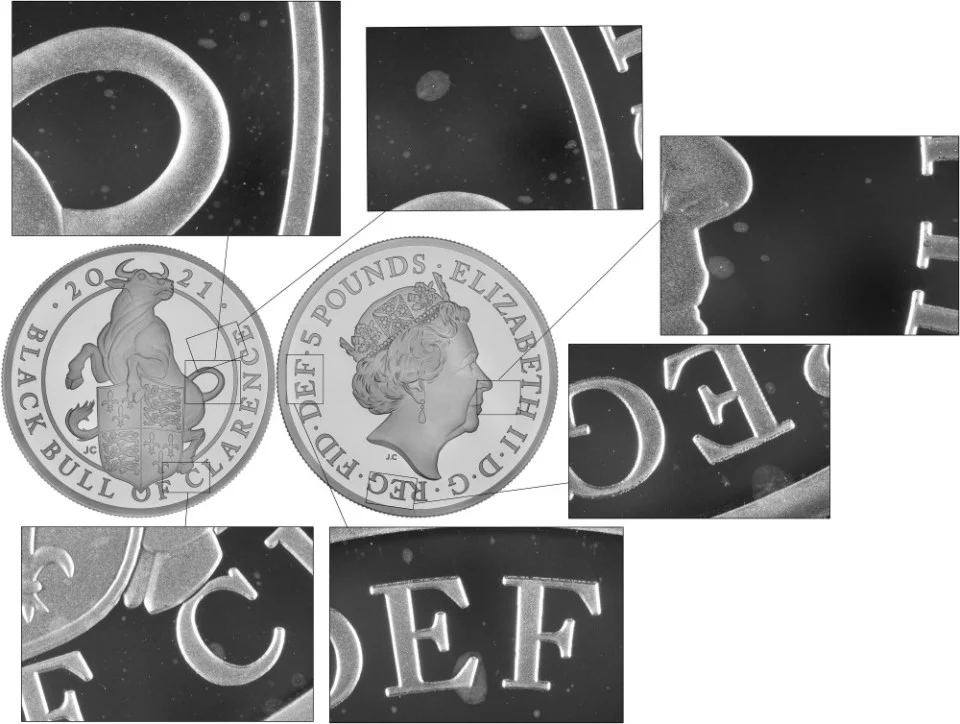
You may have heard of blemishes such as "toning", "tarnishing" or "milk spots", or experienced it yourself with your own coins. These blemishes have no effect on the intrinsic value of bullion coins when it comes to selling however, proof items will be reviewed on a case-by-case basis.
These blemishes can be present at any stage of a coin's life-cycle, whether a brand-new coin received directly from a mint, or a vaulted item kept in-capsule.
Toning & Tarnishing
Toning/tarnishing is a completely natural process that takes place when the metals react with atmospheric elements in the air such as oxygen, sulphur or moisture. The chemical reaction forms a thin layer of oxide or sulphide on the metal's surface, creating a patina effect.
Metals such as gold and platinum are inherently near-inert and unreactive, it is typically when an alloy is present, such as with 22 carat gold, that toning takes place, as the alloy metals react with the atmosphere. Silver is slightly more reactive which is why it is more prominent to toning.
Milk Spots
Milk spots are typically an inherent byproduct of the minting and manufacturing process, caused by a reaction to any chemical residues from cleaning the metals still present when the coins are annealed (heated).
Some mints have developed technologies in an effort to prevent milk spots during manufacturing, such as the Royal Canadian Mint's MINTSHIELD™ technology.
Other Coin Conditions

Grade C
Very low grade coins of correct weight but worn, possibly with scratches, dents or other degradation. These coins would be suitable for jewellers as an easy source of gold, or if you're just wanting to fill a gap in a collection.
We offer these at slightly over intrinsic metal value. We do not recommend these for most regular bullion investors. More information can be found on our 'What is Grade C?' blog.
Specific Reigns, Designs or Dates
Some customers want to specific monarchs, designs or dates for the bullion coin they buy. These products can be found through the individually dated product pages and will typically carry a higher premium over "Our Choice" offerings.

Related Blog Articles









This guide and its content is copyright of Chard (1964) Ltd - © Chard (1964) Ltd 2026. All rights reserved. Any redistribution or reproduction of part or all of the contents in any form is prohibited.
We are not financial advisers and we would always recommend that you consult with one prior to making any investment decision.
You can read more about copyright or our advice disclaimer on these links.