
What is Proof? An Overview of Coin Finishes
Synopsis
We are always being asked the difference between proof and uncirculated or bullion Sovereigns, and similarly for other coins. One very brief explanation is that proof coins are shinier, but of course this oversimplifies the matter slightly.
Read on to find out the differences between coin finishes, with examples of each.

What is Uncirculated?
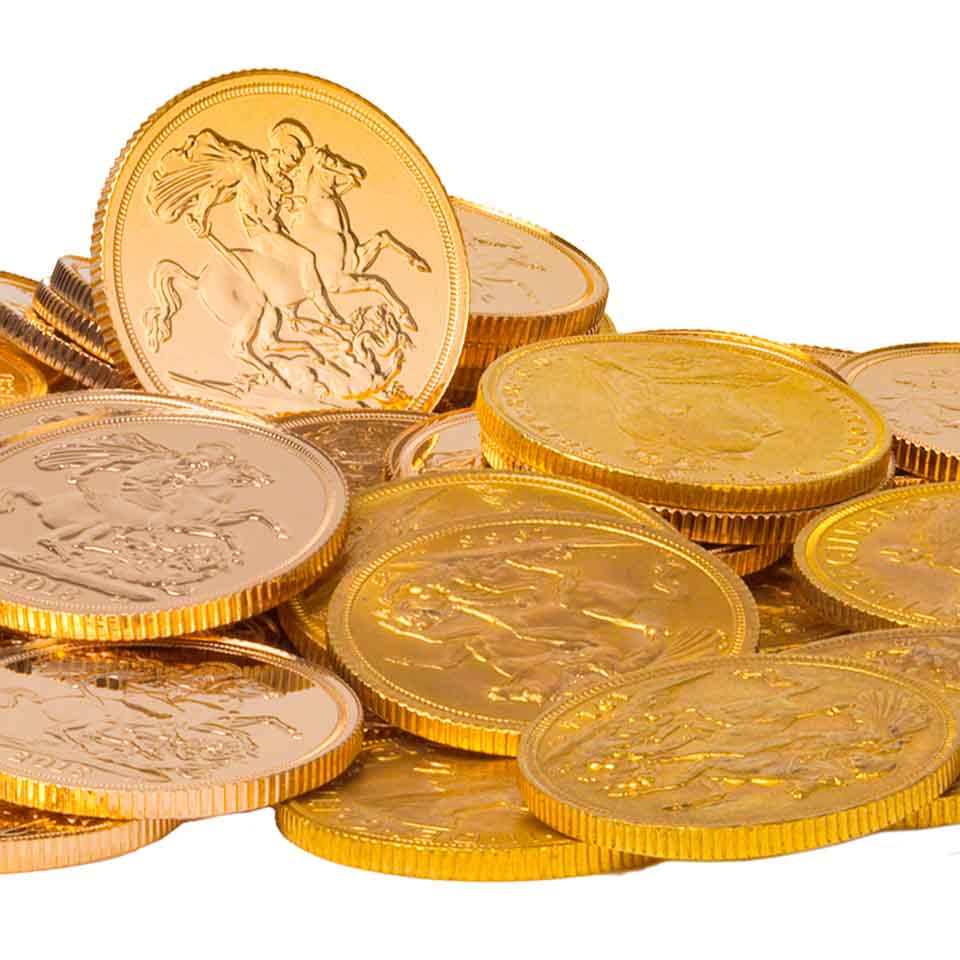
As one would expect, the word "uncirculated" means the coin has not been in circulation. Due to the nature of mass producing coins, uncirculated bullion often has bag marks, edge knocks and other small scuffs and imperfections.
Uncirculated "specimen" coins issued specially for collectors are often more carefully produced and handled, so they will likely showcase better condition than mass produced bullion coins, but may still have some small imperfections.
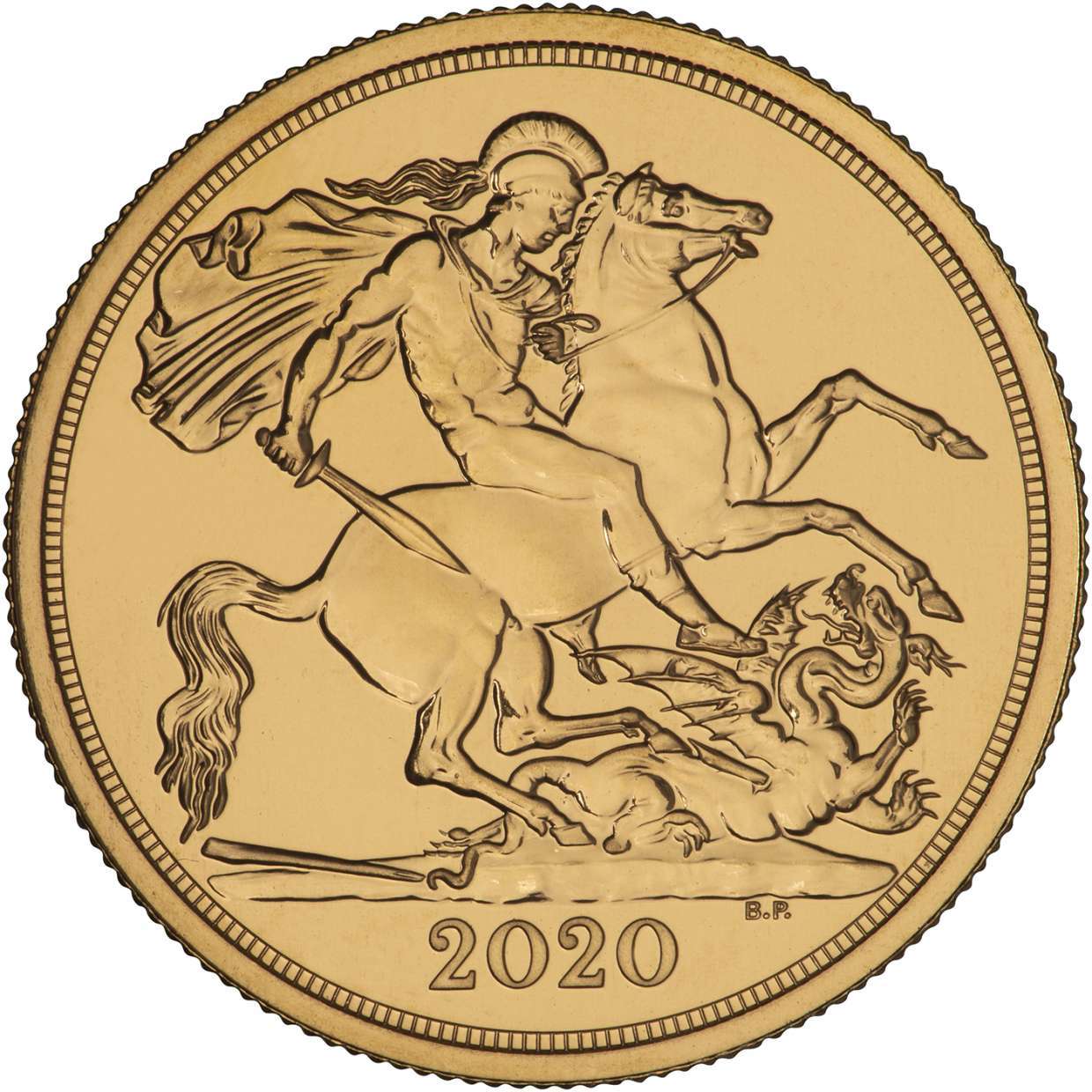
For example, since 2000, The Royal Mint describes its uncirculated non-proof Sovereigns as bullion Sovereigns, although they could be considered better quality than traditional circulated bullion coins.

What is Proof?
Proof coins are specially produced to a much higher standard of finish. Originally, proof coins were intended as pre-production samples. As a printer would produce a small number of "proof" copies for checking and approval, a mint would produce proof coins for approval of the Master of the Mint and the ruling monarch.
When coin collecting began to become popular approximately two centuries ago, a larger number of proof coins were sometimes made for sale to collectors. This has developed enormously in the past few decades, and most countries, but not all, produce proof coin and sets every year or on special occasions.

Proof is not a grade, but a term for a specially struck coin, produced originally as pre-production samples, now often marketed for collectors. Most proof coins have the raised parts of the design in a matt or sand-blasted finish, while the flat part or background has a highly polished mirror finish.
The dies used to strike proof coins are usually sand blasted first, and then the flat raised areas of the die, which correspond to the flat background areas of the coin, are then polished to a mirror finish.
The blanks from which the coins are struck are also specially prepared and polished prior to striking, as such, proof coins can be expected to be perfect and without blemishes.
Bullion Sovereigns vs Uncirculated Sovereigns
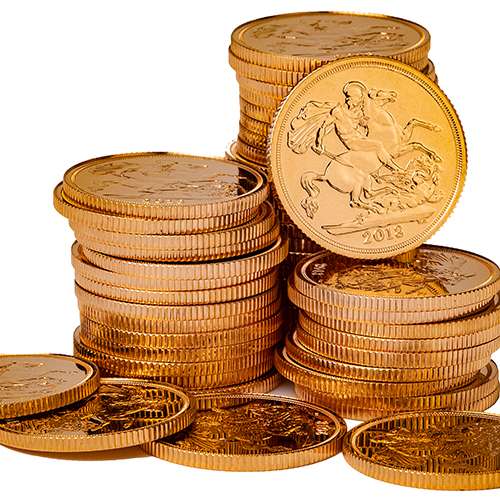
For many years, the word bullion as applied to gold Sovereign coins meant Sovereigns which were traded wholly or mainly on the basis of their gold bullion value, with little regard for date, design type or grade.
Since The Royal Mint recommenced issuing uncirculated Sovereigns in addition to proof coins in 2000, it has adopted and adapted the word "bullion" to mean ordinary uncirculated coins, i.e. a bullion grade of coin.

What is the Difference Between a Proof and a Brilliant Uncirculated Finish?
Commemorative coins are usually issued to three different finishes; Proof, Brilliant Uncirculated and Uncirculated.
- Proof coins are struck to the finest quality finish. The whole process is closely monitored throughout production by skilled craftsmen. Blanks are fed by hand into the press and the coins are struck up to six times using highly polished dies.
During minting, the dies are checked and polished. This ensures that the design is sharp and the details are highly defined. Proof coins take a great deal of time to produce and typically in one hour only 40-50 coins are minted. They are generally issued to a low mintage and are sold at a higher premium, often highly sought after by collectors looking to own a superlative example of the coin.
- Brilliant Uncirculated (BU) coins are newly minted coins that have never been in circulation. They are considered to be a finer quality than bullion coins but not as fine as proof coins.
BU coins are created for collectors seeking hand-finished dies to ensure sharper, more pristine images of the coin designs. Collectors can expect to pay higher premiums for these coins from dealers due to their finer details and quality compared to bullion coins.
- Uncirculated coins use dies which have been machine polished. These coins are struck once and are produced in large quantities. In the modern day, "ordinary" uncirculated precious metal coins are often referred to as investment bullion.
They are an excellent choice for investors who are looking to buy coins at a low premium above the intrinsic metal value.
What are the Different Proof Finishes?
Not all proof coins are the same. The most common understanding of proof is where the flat background of the coin has a highly polished mirror finish, and the raised parts of the design has a matt finish, giving a higher level of contrast between the two.
This is achieved by sand-blasting the die, the hardened steel punch with which the blank coins are struck, to give a matt finish, followed by giving the raised parts of the die a highly polished surface, usually by polishing them with diamond powder. The coin blanks themselves are usually produced to a higher quality of finish before striking.
Proof coins are usually double struck at lower striking speeds, to give a higher and sharper definition. They are usually produced on special machinery and fed by hand, rather than mechanically fed into and extracted from the coining press. They are also usually individually inspected and packaged.
A proof coin should provide an excellent specimen, and its quality should approach perfection.
What are Matt & Reverse Proof Finishes?
Not all proof coins feature the typical mirror finish background, however. The coronation coin set issued for Edward VII in 1902, for example, is well known for having a totally matt finish.
Additionally, some mints produce coins with what they describe as a reverse proof finish, i.e. where the background is matt, and the raised design is polished.
Although these are still accurately described as proof coins, most coin dealers or collectors would generally understand from the unqualified term proof, is one with a matt finish design on a highly polished field or background.

What is Piedfort?
The term 'Piedfort' derives from the French for 'heavy foot' or 'heavy weight'. A Piedfort coin is generally twice as thick and heavy as its standard version. Struck from thicker blanks, these coins are struck with the same dies as the regular coin, but the result is a heavier, higher-quality version.
Piedfort coins are not intended for general circulation, they are produced as limited edition collector's items or presentation pieces.

What is Fleur-de-Coin (FDC)?
Strictly speaking any coin which is absolutely perfect can be referred to as being in FDC condition, an abbreviation of fleur de coin. However, the use of FDC has declined in recent years, with modern grading leaning more towards numerical systems, Mint State (MS) or Brilliant Uncirculated (BU).
What are Specimen Coins?
Specimen is used to describe any coin produced to a particularly high standard of finish. Before 1970, most British proof coin sets were described and issued as specimen sets, despite the fact that they would now be called proof coins.
In recent years The Royal Mint has started to produce especially good versions of its uncirculated coins which it calls specimens. These are ordinary uncirculated coins which have been handled individually and with greater than normal care, to avoid most, but not all, of the surface blemishes which occur due to bulk handling.
What are the Differences in Production Techniques & Practices?
Most proof coins are individually hand-fed as blanks into the stamping press, checked before and after striking, only being handled afterwards with gloves or by their edges, and then individually packaged.
The press is usually operated at a lower speed, and the coins are often double or treble struck to ensure a completely sharp impression. Specimen coins are usually produced on a stamping press which has been modified so that the coins feed, after striking, into plastic channels or onto a rubber conveyor.
They are usually given a brief visual inspection on both sides before packaging individually. Ordinary coins intended for circulation feed at high speed straight from the stamping press via a hopper into large metal bins or containers.
Which is a Better Buy?
Some collectors only collect proof and commemorative coins, others only non-proof coins. Typically due to the increased premiums present, if you are purely purchasing to invest we would recommend bullion coins, whereas if you are interested in collecting, finer finishes could be an attractive choice.
We are often asked for advice when people wish to buy a Sovereign as a gift. This entirely depends what you think the recipient will wish to do with the coin, as well as the meaning behind the gift. For use in jewellery, it is better to use bullion, non-proof coins, as the finish of proof coins would quickly be spoilt. If the recipient is likely to keep and display the coin in its original box, then a proof one may be better.
Investment and Future Value
Typically proof coins will sell for higher prices than non-proof ones, however, this does not always apply. Our advice is to buy coins for the pleasure you will obtain by owning them, wearing them, or gifting them. If you follow this advice, any future value will be a bonus.
Any Additional Questions?
Do you have a query about coin finishes? Contact us and our UK-based team will be happy to help.
Related Blog Articles








This guide and its content is copyright of Chard (1964) Ltd - © Chard (1964) Ltd 2026. All rights reserved. Any redistribution or reproduction of part or all of the contents in any form is prohibited.
We are not financial advisers and we would always recommend that you consult with one prior to making any investment decision.
You can read more about copyright or our advice disclaimer on these links.